
Originally published in Lake of the Woods Area News, Volume 55, Number 5, Winter 2025
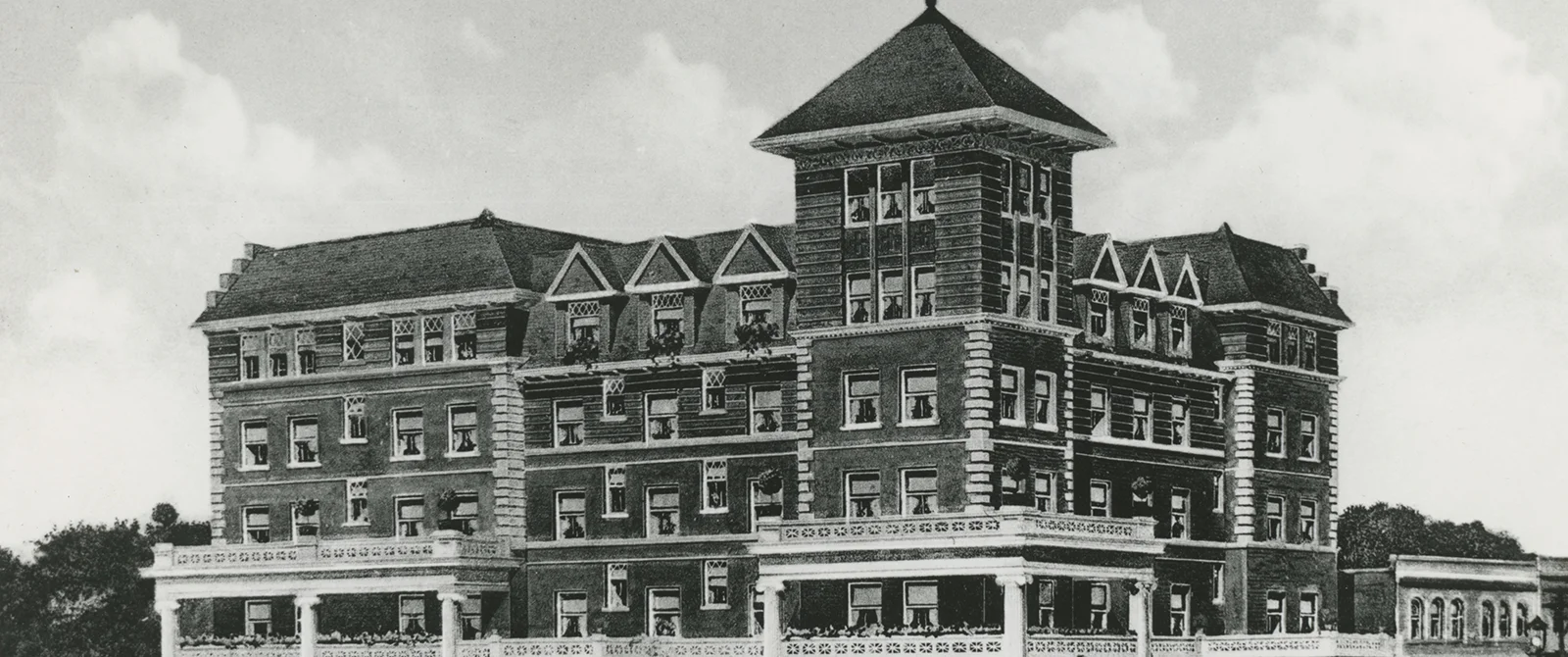
With the completion of Canada’s transcontinental railway in late 1885, the country opened up to travel as never before. Major cities were linked, vast expanses were crossed, and wilderness gems were relatively accessible. Because passenger travel was significant for the railway’s profitability, the railway began to construct palatial hotels in key cities and in beautiful locations likely to become tourist destinations. This is when hotels such as the Banff Springs and the Hotel Frontenac were built.
Delegates from Rat Portage (now Kenora) made their pitch to the Canadian Pacific Railway and later to the Grand Trunk Pacific Railway, to have a hotel built in Rat Portage, and while company executives appreciated the beauty of Lake of the Woods and recognized its potential as a tourist destination, none were interested in a hotel investment in the small town.
In 1903, confident in the town’s potential for tourism, a group of local businessmen purchased the site on the corner of Main and Second Streets for the express purpose of building a premier hotel. The site had, for almost 20 years, been occupied by the Hilliard House and the Queens Hotel, both of which had burned in 1902.
Chicago architect Frank Newell was hired to design the hotel. The style he proposed was a relatively new movement in late 19th-century and early 20th-century architecture—Beaux-Arts. It was a move away from the extreme ornamentation of Victorian architecture back to more classical traditions. Symmetry, grandeur, columns, balustrades, and dramatic rooflines were some of the elements of the Beaux-Arts design.
In the spring of 1907, the contract was awarded to a Winnipeg firm who bid $225,000. Work began immediately. The red brick was shipped from Wisconsin and the limestone came from Tyndall, Manitoba. However, financial difficulties plagued the construction, causing alterations to the original design, delays and work stoppage. While the investors originally anticipated a grand opening in 1908, it wasn’t until August 20, 1910 that the grand hotel was officially opened.
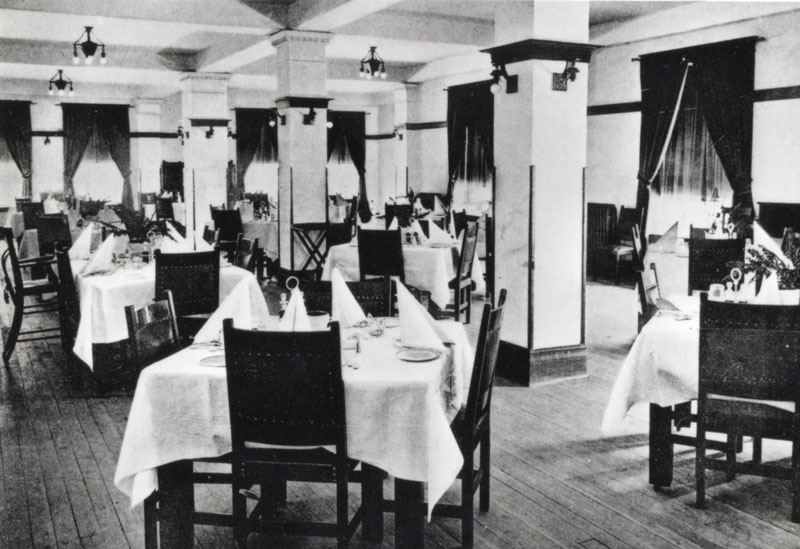
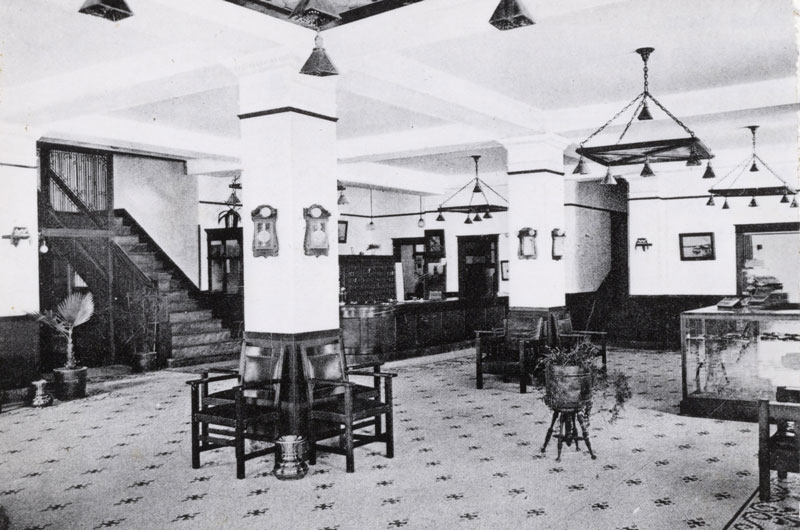
The Tourist Hotel was a beacon to the foresight, the ambition and the confidence that the townspeople had in their future as a tourist destination.
The hotel was initially overseen by a board of directors, many of whom were leading businessmen in town. It was managed by C.F. Bunnell, former owner of the Clarendon Hotel in Winnipeg. Bellboys, porters, clerks, chambermaids, bartenders, waitresses, a chef, pastry cook, accountant, engineer, fireman, and watchman were all hired.
In those early years, financial challenges continued to dog the hotel. The Town of Kenora had guaranteed the mortgage and, in 1912, considered it prudent to assume financial control. By 1931, it had taken full possession of the hotel due to unpaid taxes. It was during this time that the name of the hotel was changed.
A naming contest, held in 1933, resulted in over 1,000 suggestions, but it was Mrs. W.A. Parmeter’s entry of Kenricia, a combination of Kenora and Patricia districts, that was finally selected.
The Kenricia Hotel remained under the Town’s management until it was sold in 1938 to the Gray family of Winnipeg. The Johnston family acquired it in 1960, and it was during their ownership that some significant architectural changes were undertaken. The verandahs, which by that time were deemed unsafe, were removed and replaced by street-level retail space. The ballroom and parking garage were added. Inside, the Fountain Room Lounge (with an actual fountain), the English dining room, the Checkerboard Room and the lobby were remodelled. Above the lobby, six rooms were converted into an apartment for the manager. The hotel continued to be the centre of community activities—conventions, political rallies, carnival activities, musical entertainment, and weddings.
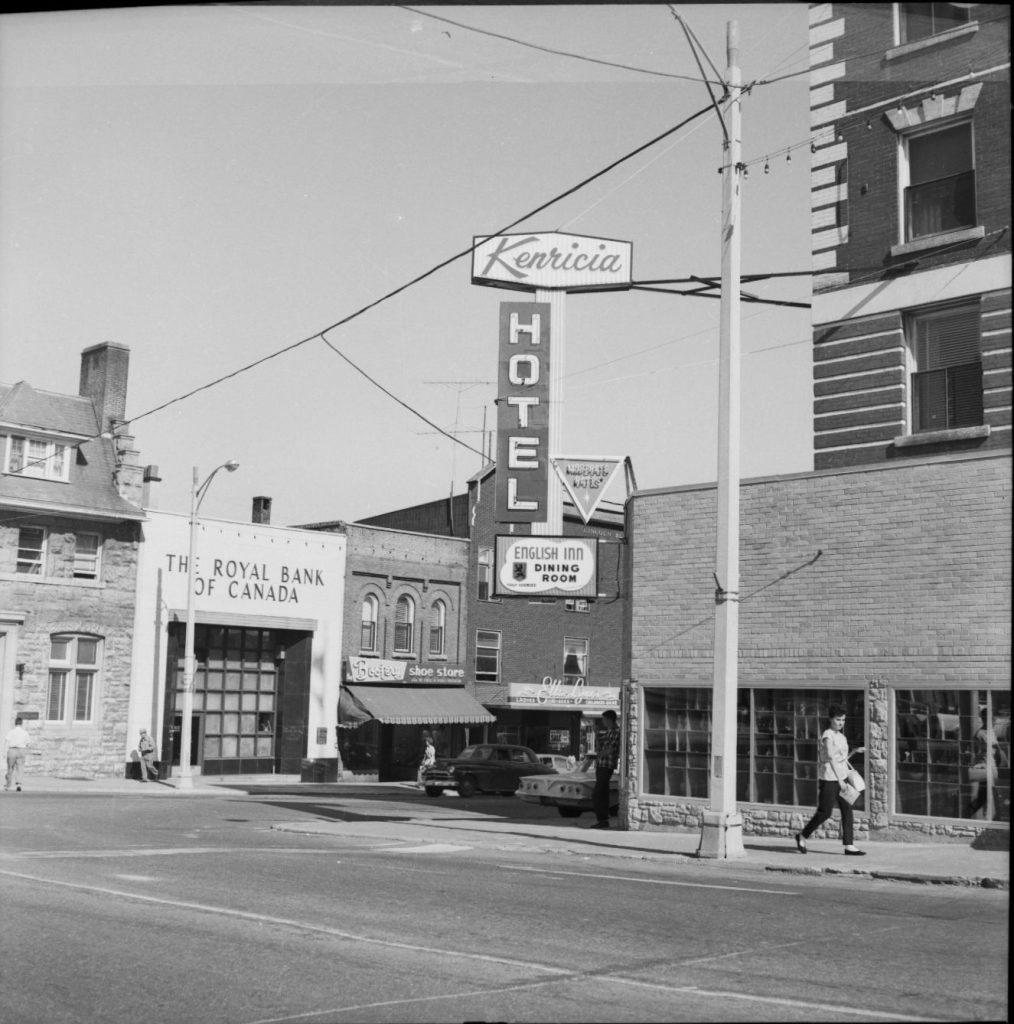
Richard Hooker assumed ownership in 1985 and owned it for twenty years before the current owners, Fadel Chediac and partners, took over.
In 2007, the Kenricia Hotel was designated a property of cultural and heritage significance by the City of Kenora. This designation provides protection for the heritage values that have been defined in the designation. There are three “values” by which a property is assessed for heritage designation. It need only have one for designation. The Kenricia has all three: design or physical value; historical or associative value; and contextual value.
To read more about the heritage designation by-law which outlines all the details of these values: click here.
In addition to the hotel’s significant architectural elements, its value also lies in its representation of what was then the town’s burgeoning tourism industry, and also in its status as a downtown landmark. Notably its corner tower is one of three that define Kenora’s downtown core. The other two being City Hall and the former Fire Hall (now the Lake of the Woods Brewing Company).
As the hotel’s story moves into its next phase, we can hope that its significance—architectural, cultural, historical and contextual—will be further enhanced and its importance in Kenora’s tourism industry will be realized once again.
