
Originally published in Lake of the Woods Area News, Volume 55, Number 2, Spring 2025
Bee mindful
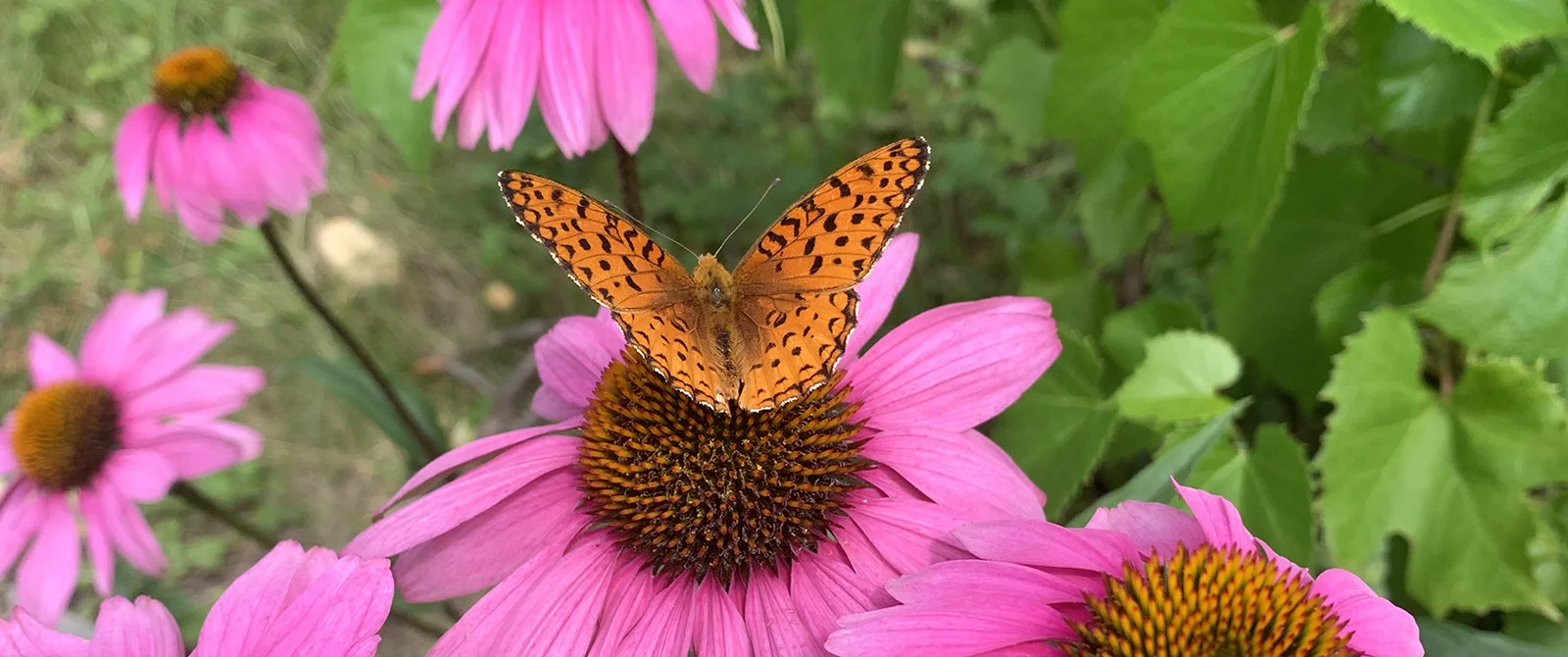
Without pollinators such as insects and birds, our global food supply and natural landscapes would be significantly harmed or even destroyed. As property owners, we can play a critical role in supporting pollinators. Although bees always come to mind, other important pollinators include butterflies, moths, flies, beetles, wasps, and birds such as hummingbirds. According to the Pollinators Partnership (pollinator.org), approximately 75-95 per cent of all flowering plants need the help of pollinators to reproduce, supporting 180,000 plant species, including a vast number of food crops, contributing billions of dollars to the global economy. The University of Guelph reports that one-third of the food we eat is related directly to the pollination services of bees!
Bee concerned
Many pollinators are in decline and under threat from several avenues. These threats result from loss of critical habitat, disease, changing climate stresses, pollution, and harmful chemicals such as certain pesticides.
Did you know?
Insect and bird-pollinated plants are bright in colour, and fragrance, and have tasty nectar, which lures the pollinators to the plants. Whereas wind-pollinated plants such as many agricultural grain crops, and many coniferous and deciduous trees have inconspicuous flowers, and no scent or nectar.
Bee natural
Every property owner can take action to help pollinators flourish. Consider these steps when managing your property this year.
- Maintain natural landscapes that will provide food and habitat for pollinators.
- Create or maintain areas of undisturbed ground with logs, leaves, and other natural materials for pollinators to find shelter and nesting material.
- Some pollinators nest in the ground, so leave some areas of your garden with bare soil or thin layers of mulch.
- Avoid using garden chemicals or insect repellents that might harm pollinators at the cottage.
- Too much artificial nighttime light is thought to be a threat to nocturnal pollinators such as moths by reducing their reproductive success. Warm-coloured LED bulbs are favoured over bright white light.
Bee helpful
- Research has found that local native pollinators prefer local native plants. Therefore preserve, transplant, or purchase native flowers that offer a mix of colours, shapes, and bloom times to attract different pollinators throughout the growing season.
- Plant some milkweed essential for monarch butterflies, as it’s the only plant their caterpillars can eat.
- Ensure hummingbirds have access to natural food sources such as wild columbine and milkweed, wild lupine, and blue flag iris. Wild lupine is commonly found in the ditches along our local highways.
- Pollinators need access to water, so place shallow water dishes or create puddles in your garden.
Bee lazy
Don’t worry about raking up leaves and deadfall this autumn but instead leave much of this material accessible to pollinators to use for overwintering.
Bee mindful
- If you can’t grow your own, buy produce from organic farmers. Producers that don’t use pesticides will be protecting pollinators. Help support these harmful chemical-free zones.
- Support farmers and beekeepers by buying local honey.
Let us all tread a little more wisely, by taking as many of these pollinator-friendly actions as we can!
Key pollinators in Ontario
Source: University of Guelph
- Bees: Honeybees are well-known, but Ontario also has approximately 420 other species of wild bees that contribute to pollination.
- Butterflies: Species like the Canadian Tiger Swallowtail, Silvery Blue butterfly, and Monarch butterfly are important pollinators.
- Wasps: While not pollen collectors, wasps can incidentally transfer pollen from one flower to another.
- Flies: Various fly species, including those with a bad reputation like houseflies and mosquitoes, can also be pollinators.
- Moths: Similar to butterflies, moths are important pollinators, particularly at night.
- Beetles: Some beetle species contribute to pollination.
- Hummingbirds: These birds are known for their long beaks and tongues, which help them reach nectar from tubular flowers, and they can carry pollen on their beaks and feathers.
- Bats: While not pollinators in Canada, bats in the southwestern United States and Mexico play an important role in agave and cactus pollination.
